8 December 2025

Why use an external monitor-recorder for your video production

Learn how external monitor‑recorders provide sharper visuals, flexible recording options, and greater control on set.

By The Atomos Team

As video production continues to evolve, filmmakers and content creators are demanding greater flexibility, consistency, and efficiency in their workflows. External monitor-recorders, such as those from Atomos, have become essential tools on set, bridging the gap between camera, editor, and cloud.

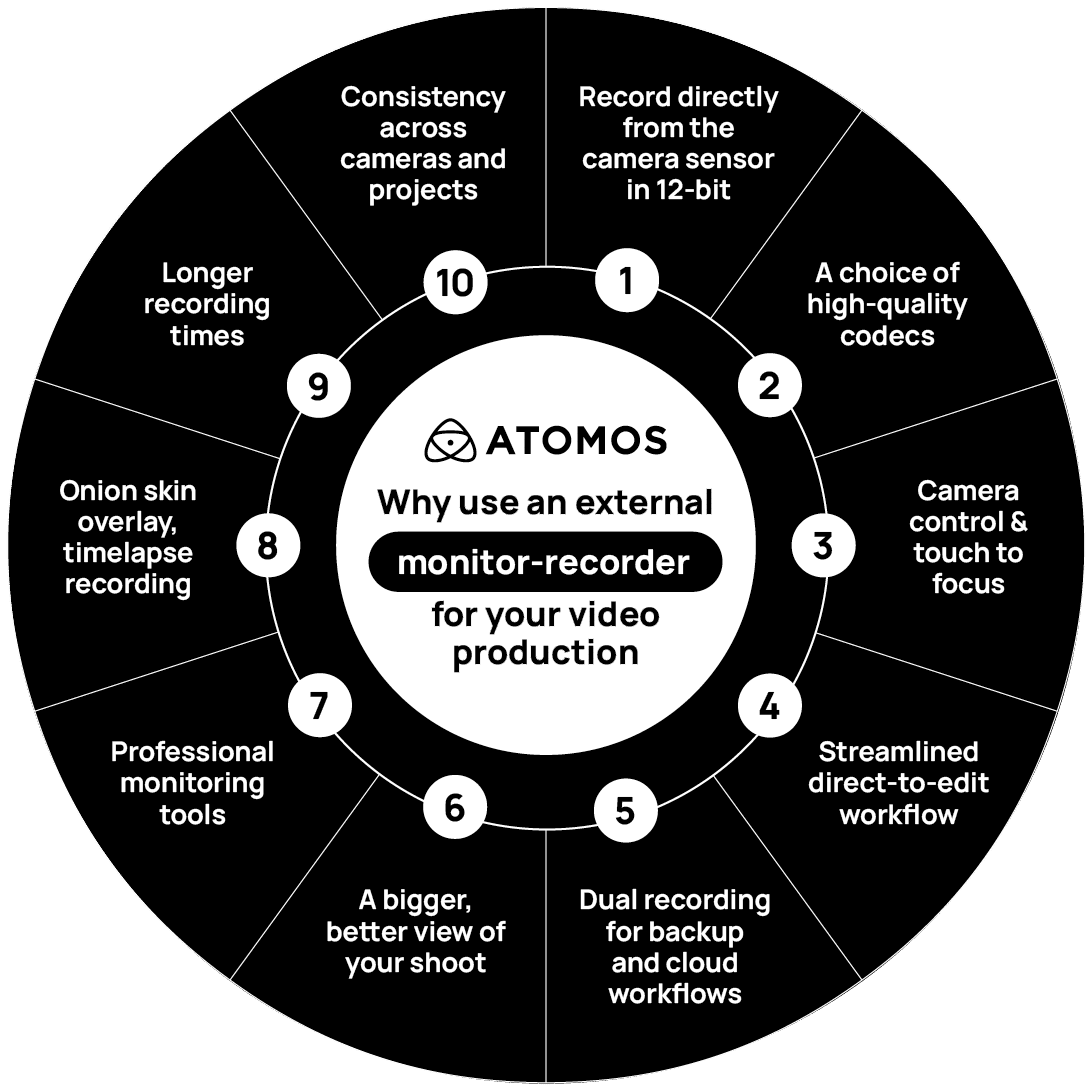
Here are ten reasons why using an Atomos monitor-recorder can improve your production, both technically and creatively.

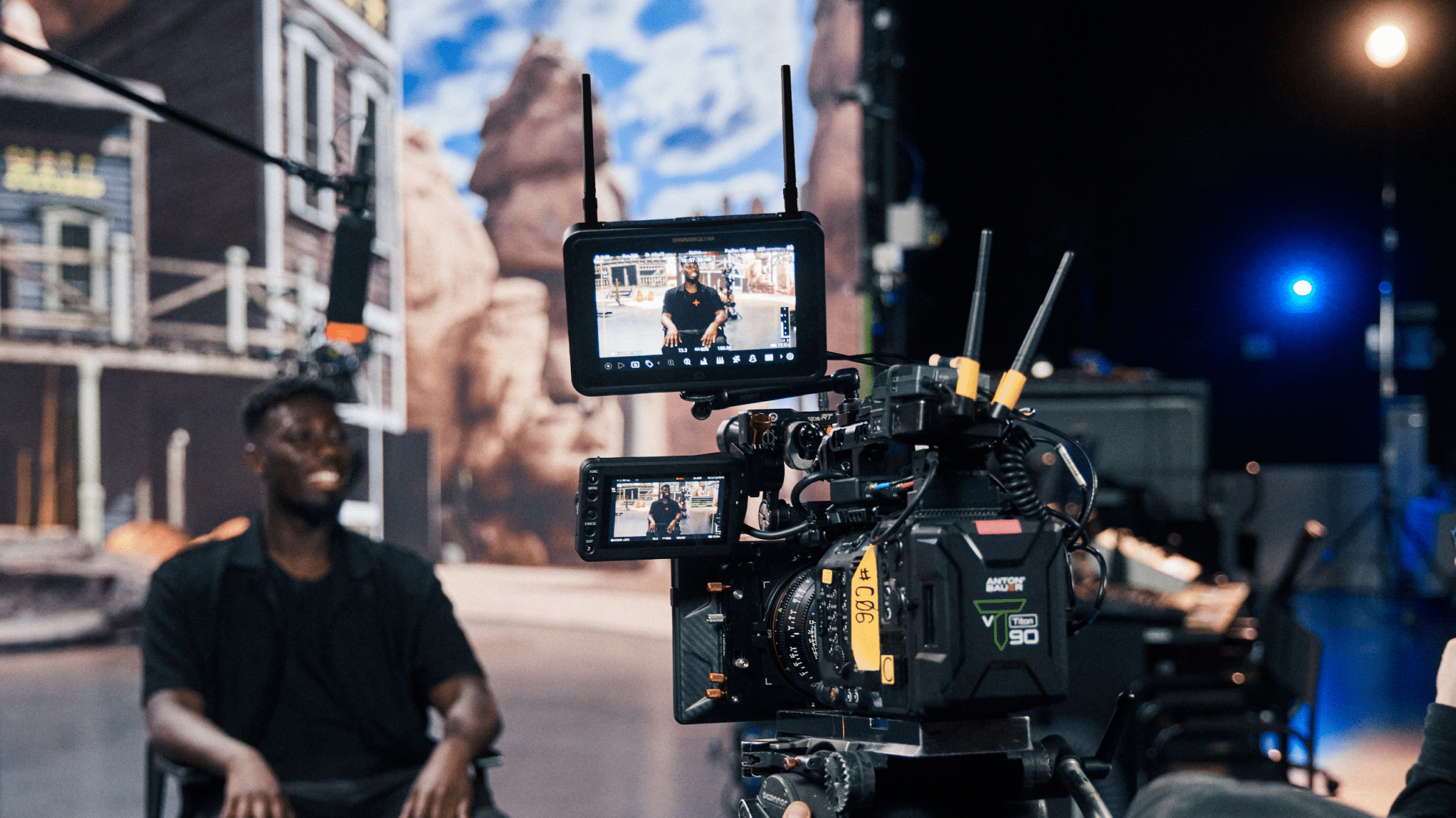
1. Record directly from the camera sensor in 12-bit

An Atomos external monitor-recorder lets you capture video straight from the camera’s sensor, over HDMI or SDI, to 12-bit Apple ProRes RAW.

This is a higher bit depth than can typically be captured by cameras internally, offering a significantly greater range of tones and colors, which is crucial for extensive color grading and post-production work, particularly in HDR workflows.

For HDMI or SDI cameras, Atomos offers the 5-inch Ninja TX and its larger 7-inch counterpart, Shogun Ultra, which can both record up to 8K ProRes RAW. For HDMI-only cameras, Ninja TX GO can record up to 6K ProRes RAW.


2. A choice of high-quality codecs

Atomos monitor-recorders support a wide range of professional codecs, including Apple ProRes, ProRes RAW, Avid DNxHR, and H.265 (HEVC). These formats deliver excellent image quality at manageable bit rates, and unlike highly compressed long-GOP codecs, they retain full frame-by-frame information — perfect for post-production and visual effects work.

While some cameras do offer internal ProRes recording, Atomos recorders provide a broader choice of formats and bit rate options, plus the flexibility of using large-capacity external media.

3. Camera control

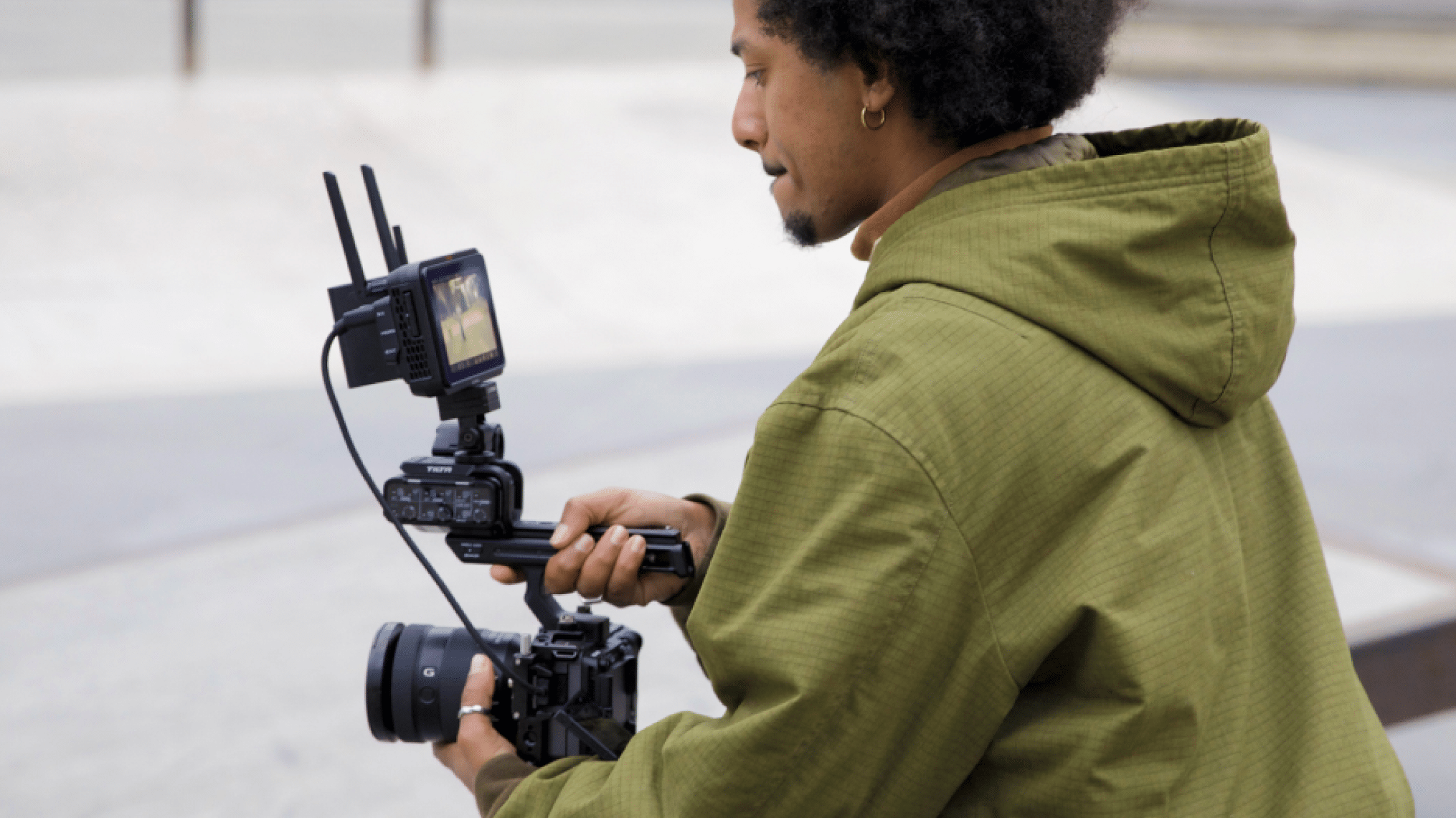
The latest Atomos monitor-recorders, Ninja TX GO and Ninja TX, incorporate USB-C ports to enable camera control on supported cameras from Canon, Fujifilm, Nikon, Panasonic, Sony, Z CAM and other leading brands.

Instead of struggling with the camera’s tiny on-body controls and menu, you can easily manage key camera functions from a much larger touchscreen monitor interface, for example:

  • Start or stop recording without reaching for the camera
  • Change essential settings (ISO, shutter, aperture, white balance)
  • Monitor and adjust from a more comfortable position (for example when the camera is mounted in a tight spot)


4. Streamlined direct-to-edit workflow

With intra-frame codecs like ProRes and DNxHR, every frame is encoded independently. This makes footage far easier for non-linear editing systems to handle, eliminating the need for transcoding or proxy generation. In many cases, you can edit directly from the media you have recorded to, saving time in post production and reducing data handling steps between acquisition and delivery.

Atomos monitor-recorders are actively cooled and designed for extended sessions, so you can focus on the shoot, rather than worrying about thermal limits or recording shutdowns.


5. Dual recording for backup and cloud workflows

A strong backup strategy is essential in modern production. Atomos recorders can capture simultaneously with your camera’s internal recording, instantly creating two copies of your footage.

With Camera to Cloud (C2C) support, a third copy can be uploaded automatically to services such as ATOMOSphere, Adobe Frame.io, or Dropbox, enabling editors or collaborators to begin work even while the shoot continues. This workflow reduces turnaround times and adds security to your production pipeline.

Ninja TX GO, Ninja TX, and Shogun Ultra all have in-built Wi-Fi connectivity.
6. A bigger, better view of your shot

Attaching a monitor instantly transforms the shooting experience. A larger, brighter display allows you, as well as your crew or clients, to assess focus, framing, and performance more accurately than with a small viewfinder or rear LCD. Being able to spot unwanted reflections, background distractions, or intrusions in real time can prevent costly reshoots and missed details.

The Atomos range includes 5-inch (Ninja), 7-inch (Shogun) and 19-inch monitor-recorder (Sumo) models.


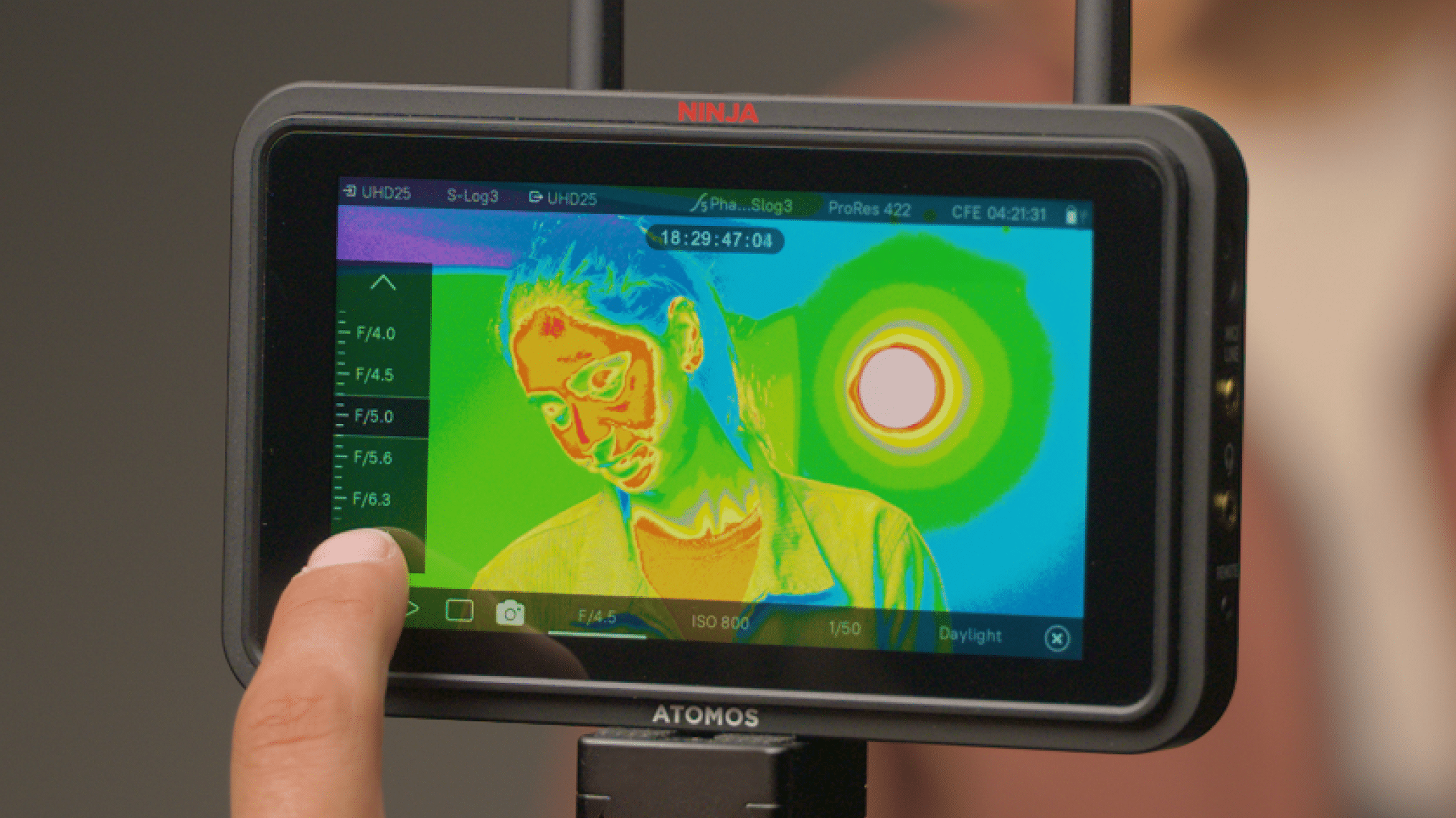
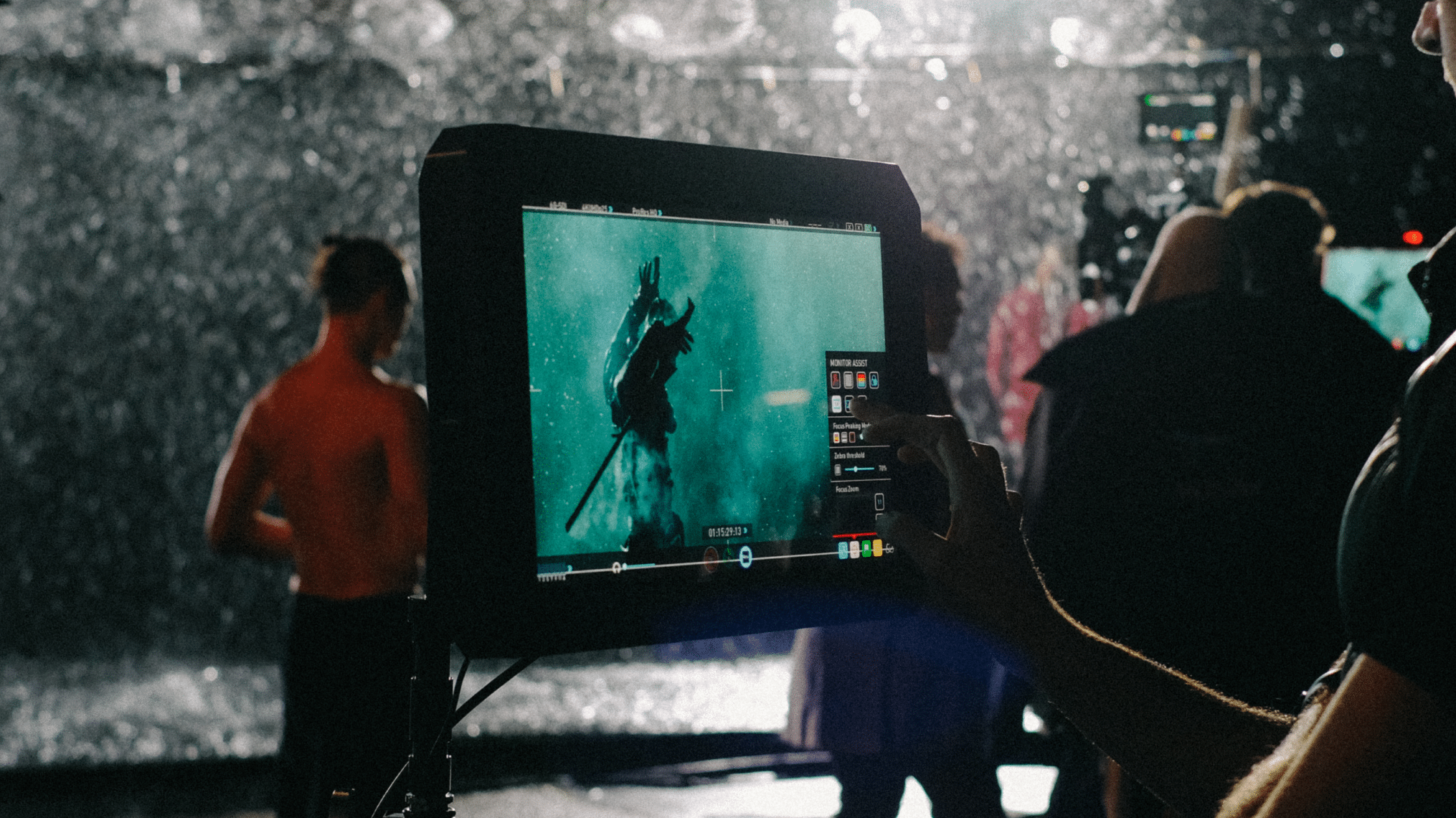
7. Professional monitoring tools

Every Atomos monitor-recorder includes an array of precision monitoring aids designed for professional workflows:

  • Focus peaking for ensuring critical sharpness
  • Waveform, zebra, false color, and histogram for accurate exposure
  • Frame guides for social and cinematic aspect ratios
  • 3D LUT support to preview your intended creative look or convert Log footage to standard or HDR color spaces such as Rec.709 or HLG
  • Anamorphic de-squeeze to correct on-screen image display when using anamorphic lenses

With HDR-capable displays, current Atomos models can also show the full highlight and shadow range of HDR content, helping you make confident creative decisions on set.

8. Tools unique to monitors that can record

Beyond recording, Atomos devices offer features that enhance pre-production and post workflows. For example, the Onion Skin overlay lets you compare frames or align shots for visual effects, stop-motion, or continuity. The Time-Lapse tool captures individual frames at set intervals and compiles them into one continuous video file.

These kinds of specialized tools are rarely available on cameras alone and can save valuable setup time during complex shoots.

9. Longer recording times

Unlike the smaller SD cards used in most hybrid cameras, Atomos recorders use CFexpress Type B or SATA SSD media, both of which offer terabytes of storage. This means longer uninterrupted recording sessions, even at high bitrates or resolutions. For shoots where duration is critical, codecs like H.265 can further extend recording time without significant compromise in quality.

Recording externally can reduce the strain on a camera’s internal processor and memory, helping to prevent overheating, a common issue in compact mirrorless bodies shooting at high resolutions.


10. Consistency across cameras and projects

As camera technology advances rapidly, many creators switch models frequently — each with its own menus, codecs, and quirks. An external monitor-recorder offers consistency across all these systems. You’ll always have a familiar interface, reliable monitoring tools, and accurate color calibration, regardless of the camera you’re using. It becomes the constant element of your rig, and keeps your workflow stable even as other gear evolves.

Conclusion

An Atomos monitor-recorder is more than a display or storage device. It’s a bridge between capture, collaboration, and creative control, designed to fit seamlessly into modern production workflows.

For shooting documentaries, commercials, or high-end cinematic projects, using a dedicated external recorder helps you capture cleaner footage, work faster in post, and maintain consistency across every shoot.

Keep Exploring

Blog

Best reasons to use an Atomos camera monitor for Camera-to-Cloud

Blog

Best camera monitor and accessories for outdoor & field shoots

Blog

Choosing the right camera monitor for your specific needs

Join the Atomos Community!

Sign up to get the latest Atomos news, filmmaking tips, firmware updates, and early access to new products and cloud tools.

You can unsubscribe at any time. See our Privacy Policy

Atomos shop is now available in Australia, EU, UK & USA.
Free Shipping for orders over $70!

For a reseller in your area, see here

Select your country